Accutane (Isotretinoin) and Your Eyes
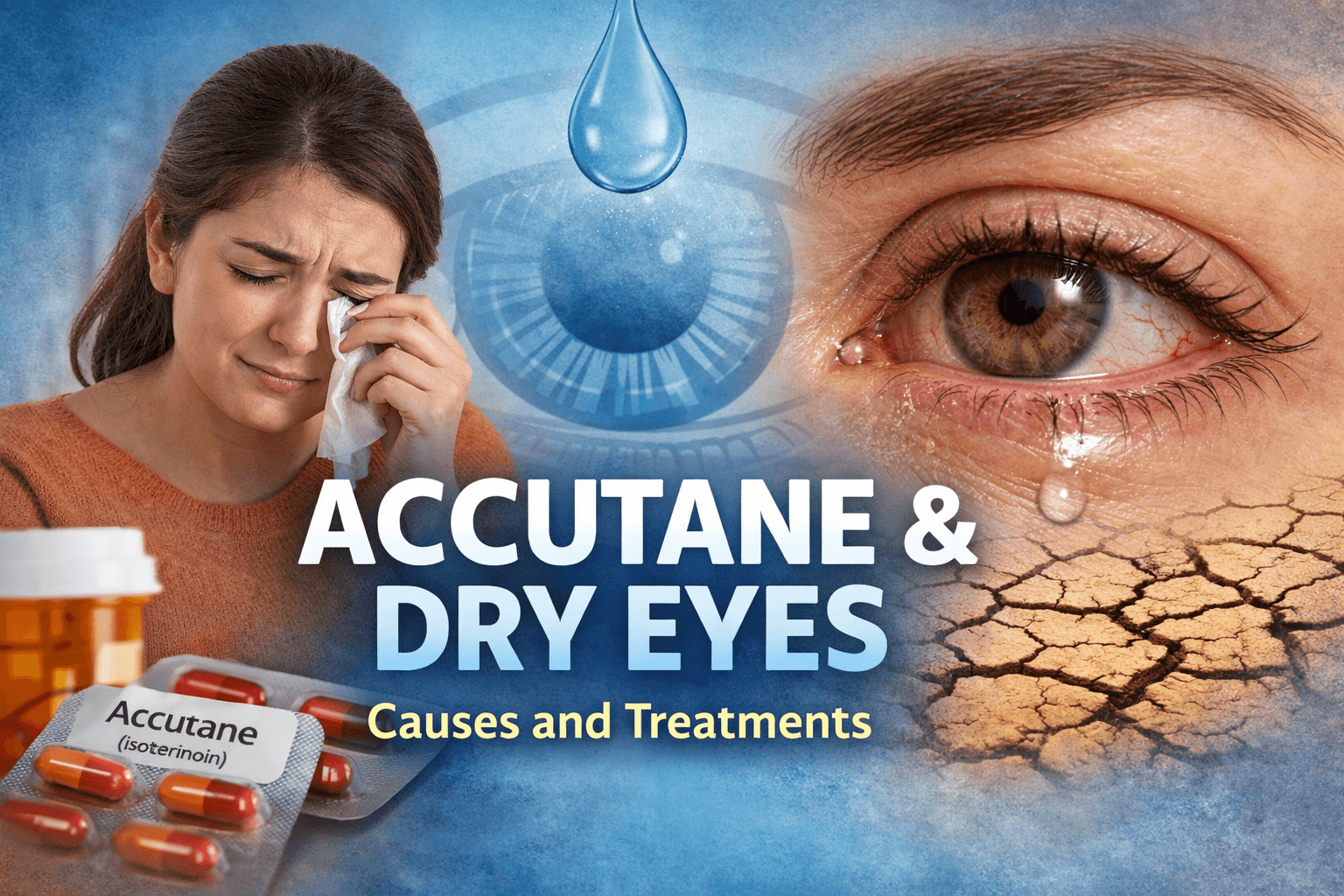
Isotretinoin—commonly known as Accutane—is one of the most effective treatments for severe acne. However, while it can dramatically improve skin, it frequently causes ocular side effects, with dry eye disease being the most common.
If you are experiencing burning, irritation, or blurry vision while on Accutane, you are not alone—this is a well-documented and expected side effect.
Why Does Accutane Cause Dry Eyes?
Accutane works by shrinking sebaceous glands to reduce oil production in the skin. Unfortunately, it also affects the meibomian glands in your eyelids, which are responsible for producing the oily layer of your tear film.
Recent studies (2021–2026) show that isotretinoin can:
- Decrease meibomian gland secretion
- Alter tear film stability
- Increase tear evaporation
- Induce inflammation of the ocular surface
The result is evaporative dry eye, often with a component of meibomian gland dysfunction (MGD).
Common Symptoms Patients Notice
Patients on Accutane often report:
- Dryness or grittiness
- Burning or stinging
- Redness
- Fluctuating or blurry vision
- Contact lens intolerance
- Increased sensitivity to light
Symptoms can begin within weeks of starting treatment and may worsen over time.
Is the Damage Permanent?
In most cases, dry eye symptoms improve after stopping Accutane. However, newer research suggests:
- Some patients develop long-term or chronic dry eye
- Meibomian gland changes may be partially irreversible in certain cases
- Risk increases with higher doses and longer treatment duration
This is why early intervention matters.
Who Is at Higher Risk?
You may be more likely to develop significant dry eye if you:
- Already have dry eye disease
- Wear contact lenses
- Spend long hours on screens
- Have underlying conditions like Meibomian Gland Dysfunction
- Live in dry or high-airflow environments (e.g., offices with AC/heat)
How to Manage Dry Eyes on Accutane
The goal is to stabilize the tear film and protect the ocular surface while you complete your course of treatment.
1. Use High-Quality Artificial Tears
- Preservative-free tears are preferred (see Dry Eye & Allergy treatment guide for recommendations)
- Use at least 2–4x daily, even if symptoms are mild
2. Support the Meibomian Glands
- Warm compresses (5–10 minutes daily)
- Lid hygiene (gentle cleansers or wipes)
3. Consider Omega-3 Supplementation
Evidence suggests omega-3 fatty acids may help improve tear stability and reduce inflammation.
4. Limit Contact Lens Wear
Many patients develop intolerance during treatment. Temporary reduction or switching to glasses can help significantly.
5. Prescription Treatments (When Needed)
For moderate to severe symptoms, your eye doctor may recommend:
- Cyclosporine ophthalmic emulsion
- Lifitegrast
- Short-term topical steroids (carefully monitored)
These treatments target inflammation, not just lubrication.
6. In-Office Treatments
If symptoms persist, procedures like:
- Meibomian gland expression
- Thermal pulsation (e.g., LipiFlow)
- Intense pulsed light (IPL)
may be considered to restore gland function.
When Should You See an Eye Doctor?
You should schedule an evaluation if you experience:
- Persistent dryness despite using artificial tears
- Blurry vision that fluctuates
- Difficulty wearing contact lenses
- Redness or irritation that worsens
Early management can prevent long-term complications.
Key Takeaway
Accutane is highly effective—but it comes with real, measurable effects on the ocular surface. The good news is that with proactive care, most patients can stay comfortable throughout treatment.
If you are starting Accutane or already noticing symptoms, a baseline and follow-up eye exam can make a significant difference in protecting your long-term eye health.
- Aragona, P., et al. “Effects of Isotretinoin on Meibomian Glands and Tear Film.” International Ophthalmology, 2022.
- Wang, M. T. M., et al. “Systemic Medications and Dry Eye Disease.” Ocular Surface, 2021.
- Egger, S. F., et al. “Ocular Side Effects of Isotretinoin Therapy.” Cornea, 2023.
- Zhang, X., et al. “Impact of Oral Isotretinoin on Tear Film and Ocular Surface.” BMC Ophthalmology, 2024.
- Liu, R., et al. “Meibomian Gland Dysfunction and Systemic Retinoids.” American Journal of Ophthalmology, 2022.