What Happens During a Comprehensive Eye Exam in NYC? (It's Way More Than Reading Letters)
If you're like most of my new patients in the East Village, it's been a while. Three years. Five. Sometimes ten. Life gets busy, your eyes feel fine, and you figure the letter chart at the DMV counts as a checkup. It doesn't.
A comprehensive eye exam takes about 30 to 45 minutes, and most of that time is spent looking at things you can't see at home — the back of your own retina, the angle where fluid drains from your eye, the layers of your cornea under magnification. Reading the letter chart is maybe two minutes of it. Here's what the rest is for.
What a comprehensive eye exam actually includes
I work through a set sequence at every comprehensive visit. Some of it you'll recognize, some you won't.
Visual acuity comes first — the chart, with and without your current glasses. Then refraction, which is the "better with one, or two?" part. This is where I determine your glasses prescription, but it's also where I can tell whether a change you've noticed is a real shift or just screen fatigue.
I check how your eyes move together (extraocular motility), how your pupils react to light, and whether your eyes align properly at distance and near. Subtle binocular issues cause a lot of the "eyes feel tired by 3pm" complaints I hear, especially from people on screens all day.
The slit lamp exam is next. The slit lamp is a microscope with a bright, thin beam of light. I use it to look at your cornea, iris, lens, and the front chamber of the eye in cross-section. Cataracts, corneal dystrophies, early infections, contact lens overwear — most things that happen in the front half of the eye show up here.
Then the retinal exam. I can do this through dilation drops, or sometimes with a wide-field camera. Either way, I'm looking at the optic nerve, the macula, the peripheral retina, and the blood vessels that supply them. This is where glaucoma, macular degeneration, retinal tears, and diabetic changes become visible.
Finally, I check your intraocular pressure — a quick puff or a gentle probe. Elevated pressure is one of the risk factors for glaucoma, and glaucoma has no early symptoms.
If you wear contact lenses, or want to, this is also when I'd transition into a contact lens exam — a separate set of measurements on top of the comprehensive exam.
The eye-health screening you can't get online
Online vision apps have improved. They can give you a rough glasses prescription in a pinch, and some can check contrast sensitivity. They cannot replace the comprehensive exam.
The reason is simple: the diseases that blind people — glaucoma, macular degeneration, diabetic retinopathy, retinal detachment — start with no symptoms. By the time you notice vision loss, you've lost tissue. An online test that asks you to read letters cannot see your optic nerve. It cannot measure your eye pressure. It cannot spot a retinal hole before it becomes a detachment.
I've had patients come in with "perfect vision" on a home test and a retinal tear I needed to laser that afternoon. That's the gap.
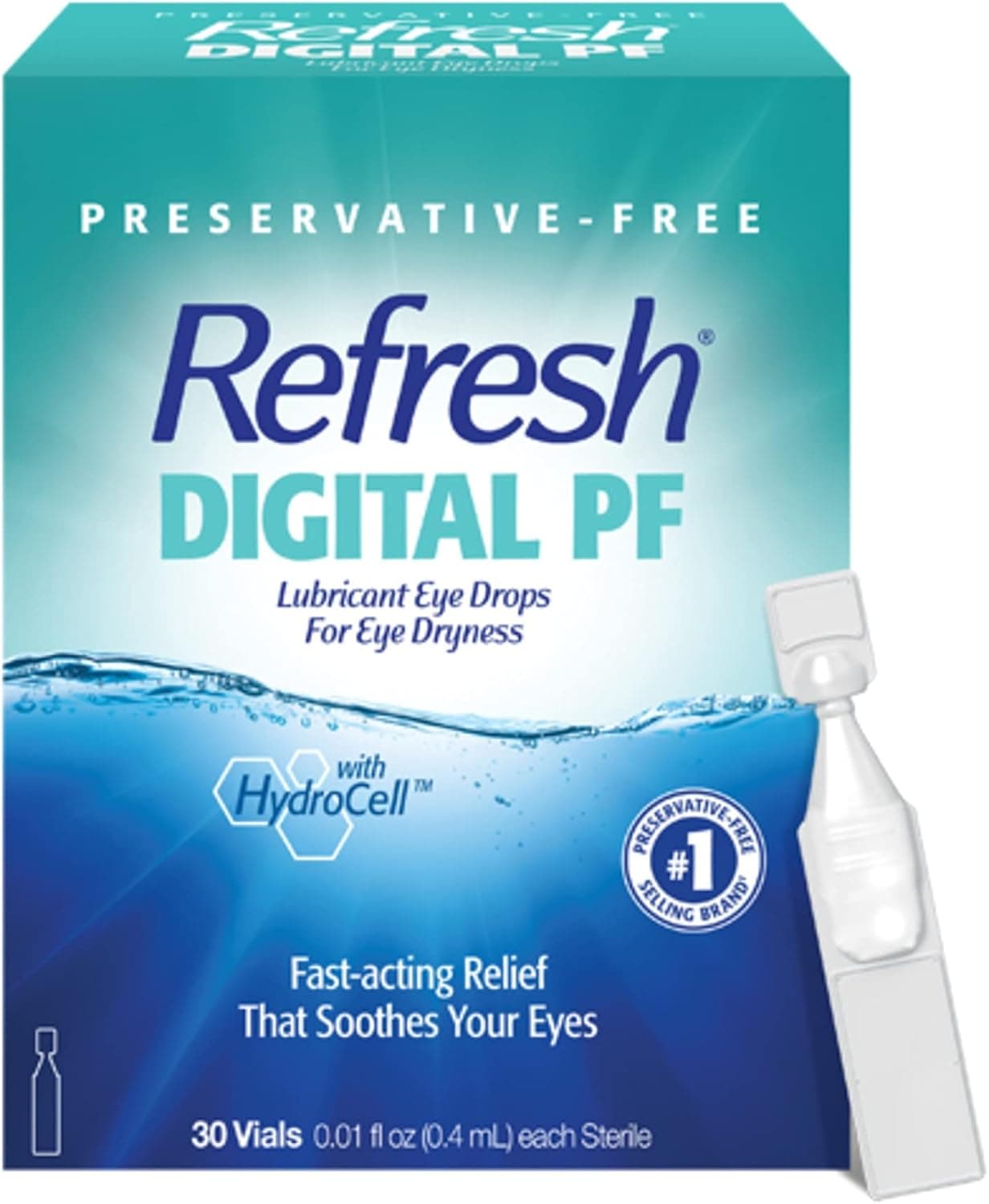
This is also where I pick up dry eye, blepharitis, allergy-related inflammation, and the early cellular changes on the cornea that contact lens wearers sometimes develop. If your eyes feel gritty or burn by 4pm, that's not normal wear and tear — it's worth a dedicated dry eye evaluation, but I'll often flag the first signs at a routine comprehensive exam. For mild screen strain between visits, preservative-free artificial tears (the single-use vials, not the bottled ones with preservatives) take the edge off, and a basic lid hygiene routine — a warm compress and a lid wipe — handles a lot of the morning grittiness people assume is normal.
How often you really need an exam
A common myth is that if your vision hasn't changed, you don't need to come in. That's backwards. Vision changes late. The point of the annual exam is to catch disease before vision changes.
For most healthy adults, I recommend a comprehensive exam every one to two years. Annually is better — and I strongly recommend annually for anyone over 60, anyone with diabetes, anyone with a family history of glaucoma or macular degeneration, and anyone who wears contact lenses (contact lens fits are annual by medical standard, because the lenses sit on living tissue).
Kids follow a different timeline. The American Optometric Association schedule is roughly: a first exam around 6 months, again at age 3, again before first grade, then yearly through school. If you have kids, here's the guide I wrote on pediatric exams — the timeline may surprise you.
If you're in your 20s or 30s, low-risk, with stable vision, every two years is acceptable. I'd still rather see you yearly, because the eye-health pieces aren't optional.
What your eyes can reveal about your overall health
This is the part most patients don't expect. Your retina is the only place in the body where I can see blood vessels and nerve tissue directly, without surgery or imaging contrast. That makes the eye a window into systemic disease.
Diabetes shows up in the retina first, sometimes years before a formal diagnosis. Microaneurysms, small hemorrhages, and leaky vessels in the macula are signs of diabetic retinopathy. I've referred several patients back to their primary care doctor for a hemoglobin A1c after seeing these changes — and a few of those referrals turned into new diabetes diagnoses.
High blood pressure leaves traces too. The retinal vessels become narrowed, and in advanced cases you can see silver wiring and flame-shaped hemorrhages. Sometimes I'm the first person to suggest a patient check their blood pressure.
Multiple sclerosis can present as optic neuritis — inflammation of the optic nerve that causes blurred vision, color desaturation (reds look washed out), and pain with eye movement. I've had patients come in thinking they need a new glasses prescription when the real issue was neurological.
There are rarer signals. A cholesterol crystal lodged in a retinal artery (a Hollenhorst plaque) suggests vascular disease that needs same-day workup. Some autoimmune conditions cause characteristic inflammation inside the eye. Certain medications — hydroxychloroquine (Plaquenil), used for rheumatoid arthritis and lupus, is the classic example — can accumulate in the macula over years and require regular monitoring, because the retinal damage is silent until it's advanced.
I don't say any of this to scare you. Most comprehensive exams come back clean. But the value of the exam isn't just the prescription — it's the screening. When something is off, we catch it early.
If it's been more than a year since your last one, that's the only reason you need to come in.
Thinking about booking an eye exam?
I see patients at Eye & Health in the East Village. If you'd like a comprehensive exam — one that looks at the full health of your eyes, not just your prescription — you can book online — usually within the week.
This is not medical advice. Please consult your eyecare professional or schedule an eye appointment today.