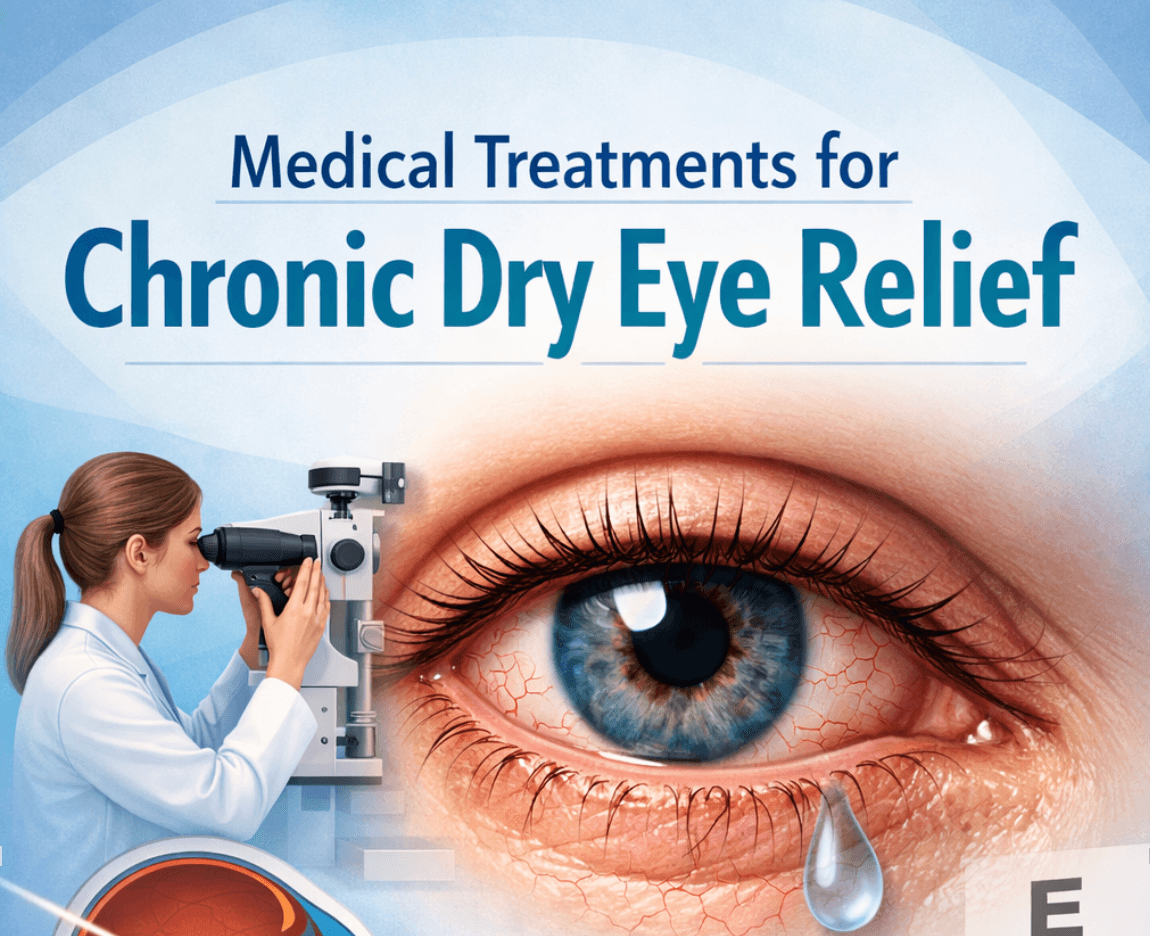
Living in New York City exposes our eyes to a unique set of challenges. From the harsh winds of winter on the Hudson River to the dry, recycled air in high-rise office buildings, environmental factors are constantly working against our eye health. While many people reach for over-the-counter eye drops to soothe occasional irritation, those suffering from persistent symptoms require a more robust approach. If you have been using artificial tears frequently without lasting relief, you may be a candidate for medical treatments for chronic dry eye.
Chronic dry eye is not just a nuisance; it is a multifactorial disease often caused by either decreased tear production or excessive tear evaporation. When left untreated, it can damage the eye's surface and impair vision. At our Manhattan practice, we believe that understanding your underlying condition is the first step toward effective treatment.
When Drops Aren’t Enough: Prescription Options
For many patients, the transition from lubricating eye drops to prescription medication is necessary to manage inflammation and increase tear production. Over-the-counter drops simply add moisture, but prescription therapies often aim to treat the root cause of the dryness.
**Anti-Inflammatory Drops**
Inflammation is a key component of chronic dry eye syndrome. To combat this, we may prescribe cyclosporine or lifitegrast ophthalmic solutions. These medications work by reducing the inflammation on the eye's surface, which can help your body produce more of its own natural tears. According to recent reviews, these immunomodulatory agents are considered the mainstay of therapy for evaporative dry eye and aqueous deficient dry eye (Singh et al., 2023). Unlike artificial tears, these drops require consistent use over several weeks to reach their full effectiveness.
**Steroid Eye Drops**
In some cases, we may recommend a short course of corticosteroid eye drops to quickly bring inflammation under control before starting a long-term maintenance therapy like cyclosporine. While effective, steroids are generally used for a limited time to avoid potential side effects such as increased eye pressure.
Punctal Plugs: Conserving Your Tears
If your body is producing tears but they are draining away too quickly, punctal plugs may be an excellent solution. Think of your tear ducts as the drain in a sink; if the drain is open, the water flows out. By inserting tiny, biocompatible plugs into the puncta (the small openings in the eyelids that drain tears), we can "close the drain" and keep your natural tears on the eye surface longer. This is a minimally invasive procedure that can be done in our office and provides immediate relief for many patients (National Eye Institute, 2021).
Treating the Oil Glands: In-Office Procedures
A leading cause of dry eye, particularly in urban environments dominated by screen use, is Meibomian Gland Dysfunction (MGD). The meibomian glands, located in the eyelids, produce the oily layer of the tear film that prevents evaporation. When these glands become blocked, tears evaporate too quickly. Medical treatments for this issue focus on unclogging the glands.
**Thermal Pulsation Therapy (LipiFlow)**
I work with offices that utilize advanced technology like thermal pulsation to apply controlled heat and pressure to the eyelids. This treatment melts the blocked oil and expresses it from the glands, restoring the natural lipid layer of your tears. The American Academy of Ophthalmology identifies thermal pulsation as an effective intervention for patients with MGD who have not responded to conservative home therapies (American Academy of Ophthalmology, 2023).
**Intense Pulsed Light (IPL)**
Originally used in dermatology, IPL has been adapted to treat dry eye. The light therapy reduces inflammation and abnormal blood vessels around the eyelids while also melting the hardened oils in the meibomian glands. This can significantly improve tear stability.
Autologous Serum Eye Drops
For patients with severe dry eye that does not respond to other treatments, we may recommend autologous serum eye drops. These are created from your own blood, which is processed to extract the serum. Because serum contains essential growth factors and vitamins, these drops closely mimic natural tears and can promote healing of the ocular surface. This is often considered a "last resort" but is highly effective for severe cases.
Practical Steps for Management
While medical treatments are powerful, they work best when combined with good daily habits:
- **Stay Hydrated:** NYC tap water is great, but are you drinking enough? Dehydration directly affects tear volume.
- **Blink consciously:** When staring at computer screens, our blink rate drops significantly. Make a conscious effort to blink fully and frequently.
- **20-20-20 Rule:** Every 20 minutes, look at something 20 feet away for 20 seconds to reduce digital eye strain.
Take Control of Your Eye Health
You do not have to live with the gritty, burning sensation of dry eyes. Whether you work in a skyscraper in Midtown or commute through the windy streets of the Financial District, your environment should not dictate your comfort. We are here to help you navigate the latest medical treatments to find the relief you deserve.
If you are ready to move beyond artificial tears and address the root cause of your symptoms, schedule a comprehensive dry eye evaluation with Dr. Latek.