Ortho-K: Wear Lenses at Night for Clear Vision All Day Without Glasses or Surgery
Most of my patients find Ortho-K through one of three routes: their kid got diagnosed with myopia and someone mentioned overnight lenses, they're a swimmer or athlete who hates dealing with contacts during the day, or they're considering LASIK and want something reversible first. All three are reasonable paths. Ortho-K — short for orthokeratology — is one of the more quietly useful things I do, and it doesn't get talked about enough.
Here's the short version: you wear a specially designed rigid contact lens overnight. While you sleep, the lens gently reshapes your cornea — the clear front window of the eye. You take the lens out in the morning, and you can see clearly all day without glasses or daytime contacts. The effect is reversible; stop wearing the lenses, and within a few days to a couple of weeks, your eye returns to its original shape. No surgery. No permanent change.
How corneal reshaping works while you sleep
To understand Ortho-K, it helps to know a little about the cornea. The cornea provides about two-thirds of the eye's total focusing power. Its curvature is what determines most of your refractive error — how myopic, hyperopic, or astigmatic you are. Change the curvature slightly, and you change the prescription.
An Ortho-K lens is shaped so that it floats on the tear film and applies gentle, fluid pressure to the corneal tissue. It doesn't cut anything, and it doesn't scrape cells off. It uses hydrostatic pressure from the tear layer underneath the lens to flatten the central cornea by a precise, small amount — usually tens of microns. That's enough to correct several diopters of myopia. The corneal tissue simply redistributes overnight; the cells themselves are not damaged.
The correction wears off because the cornea's tissue naturally wants to return to its original shape. Most patients get a full day of clear vision from one night of wear. Some get two days from one night once their eyes stabilize. If you stop wearing the lenses entirely, the effect fully reverses within about two weeks.
Ortho-K is most reliable for prescriptions up to about -6.00 diopters of myopia, and somewhat less so for higher amounts of astigmatism. Beyond those ranges, results get less predictable, and we may have the conversation about specialty contact lenses instead.
Who's a good candidate (and who isn't)
A good Ortho-K candidate has a prescription in the treatable range, healthy corneas, and the willingness to commit to a daily routine. The willingness part is often the limiting factor, not the eye.
Kids as young as 7 or 8 can wear Ortho-K — and many do, because it doubles as myopia management, which I'll get to. Parents handle the insertion and removal at first, and most kids take over by age 10 or so. On the other end, I fit adults well into their 40s and 50s, though if you have presbyopia (the reading-glasses age), we may need to discuss a modified design or accept that you'll still need readers.
You're probably not a good candidate if:
- Your myopia is over -6.00 diopters, or your astigmatism is over about -1.75 (we sometimes can, but expectations need to be carefully set).
- You have very thin or irregular corneas — Ortho-K won't work on eyes that need specialty lenses for structural reasons.
- You have severe dry eye. Rigid lenses are less forgiving than soft lenses on a dry ocular surface.
- You can't commit to the cleaning routine. This is non-negotiable; an unsanitary Ortho-K lens is a real eye infection risk, same as any contact lens.
- You're a non-compliant sleeper — shift workers who can't predict when they'll sleep, or anyone whose schedule won't allow a consistent wearing window.
What the first weeks feel like
The fitting process takes several visits over a few weeks. At the first visit, I map your cornea with a topographer — the same instrument I use for specialty contact lens fits. From that map, I order a custom Ortho-K lens. When it arrives, I teach you to insert and remove it, and you wear it that first night.
Most people find the lens itself noticeable at first — like having something in your eye, because you do. The eyelid passes over the edge with each blink, and for the first week or two, that's mildly irritating for some patients and unnoticeable for others. Almost everyone adapts within a week or two to the point where they no longer feel the lens.
The vision on day one is usually better but not perfect. It takes a few nights of consistent wear for the cornea to stabilize in its new shape. By the end of week one, most patients are seeing 20/20 or close to it without glasses. By the end of week two, the effect is stable enough that I can fine-tune the fit if needed. A small number of patients need a second lens design — this is normal and not a failure.
In my experience, the patients who struggle most are the ones who skip nights early. The cornea needs consistent reshaping to learn its new shape, and a stop-start schedule in week one can drag the process out. Once you've stabilized, you can occasionally skip a night without much consequence.
Ortho-K's bonus: slowing childhood myopia
This is the reason I fit more Ortho-K lenses than I did a decade ago. A 2023 meta-analysis of 14 randomized controlled trials in over 2,000 children, and a 2024 systematic review of 45 studies, both confirmed that Ortho-K wear slows the elongation of the eye in myopic children meaningfully compared to single-vision glasses — with the 2024 review also finding that the slowing effect fades if a child stops wearing the lenses, which is why consistency matters year over year. The mechanism is thought to be related to how the reshaped cornea focuses peripheral light, creating a signal to the eye to stop growing.
For a child whose prescription is climbing every year, Ortho-K serves double duty. They get lens-free daytime vision (which is great for sports, school, and self-conscious tweens), and they get active slowing of their myopia. It's one of three evidence-backed options I discuss with parents, alongside low-dose atropine drops and MiSight soft daily lenses. I walk through all three in my myopia management guide.
A note for parents: the lens care routine is the same as for any contact lens, but with a smaller margin for error because Ortho-K lenses are expensive and replacing one is not cheap. I'll walk you and your child through the routine together before you leave the office with lenses.
Caring for your Ortho-K lenses
Ortho-K lenses are tiny medical devices that you wear on your eye for 8 hours a night. Care matters, and most of the problems I see in practice are care-related, not design-related.
- Use only the solution system I recommend. Ortho-K lenses require specific cleaning and disinfecting systems — not soft lens solutions, and definitely not whatever is on sale at the drugstore.
- Rub and rinse every morning when you remove the lens. "No-rub" solutions are not enough for rigid lenses.
- Use preservative-free saline for any rinsing that touches the lens right before insertion. Preserved solutions trapped under the lens overnight will sting.
- Never use tap water on the lens, on the case, or on your hands immediately before handling. Acanthamoeba — a free-living organism in tap water — can cause a devastating corneal infection. This is not a theoretical risk; it happens to contact lens wearers every year.
- Replace the case every three months. Old cases grow biofilms.
- Bring your lenses and case to every visit. I check them under the microscope for warpage, deposits, and surface damage — all of which can affect both vision and comfort.
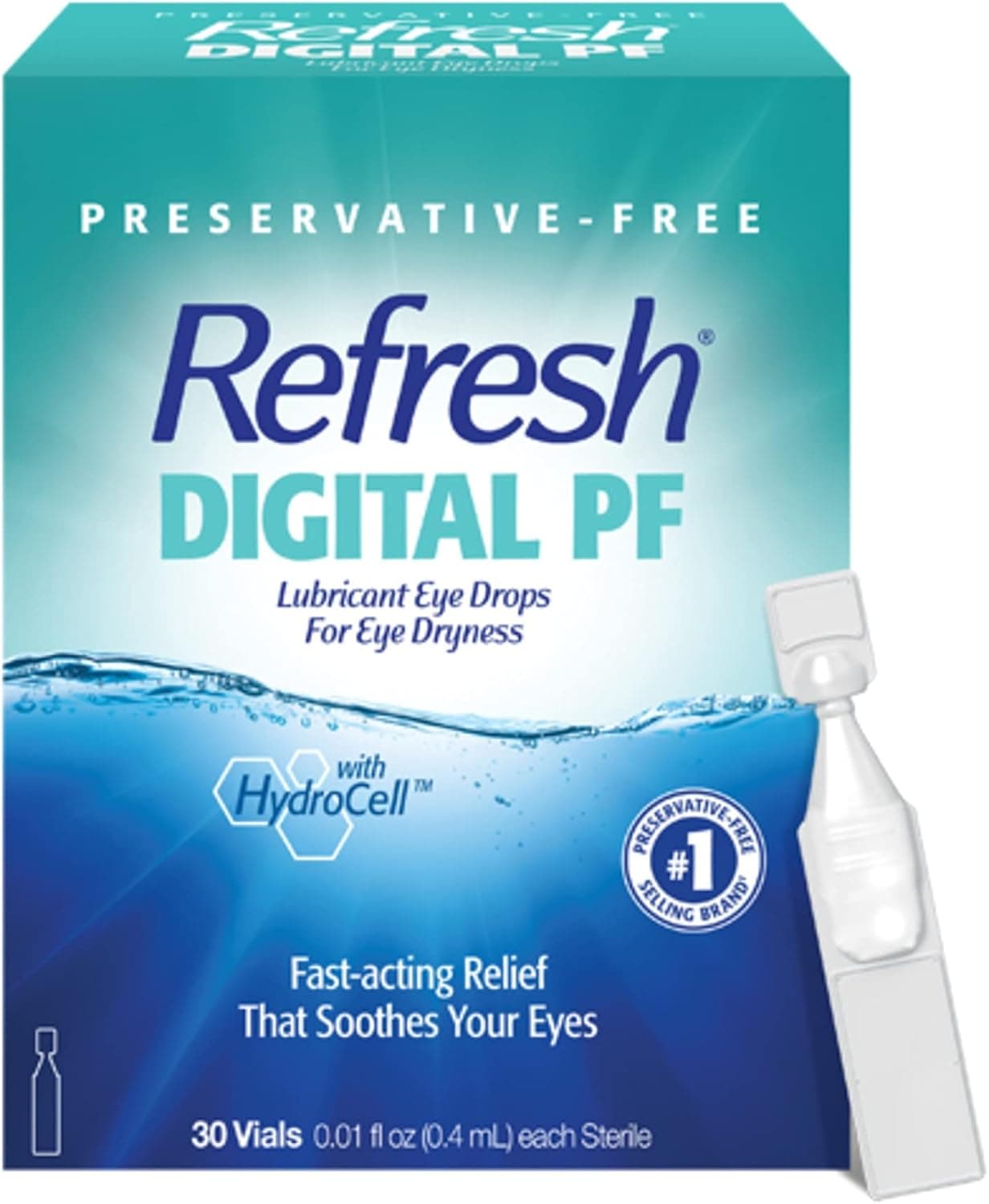
For dry-eye-prone patients, preservative-free artificial tears before bed and on waking help a lot. The same is true for anyone whose eyes feel dry in the morning regardless. If you haven't had a recent contact lens exam or you've never been fit in contacts before, that's the starting point — Ortho-K is built on the same foundation of healthy ocular surface and good hygiene habits.
Thinking about Ortho-K?
I see patients at Eye & Health in the East Village. If you'd like to find out whether you or your child is a good candidate for overnight corneal reshaping lenses, you can book online — usually within the week.
This is not medical advice. Please consult your eyecare professional or schedule an eye appointment today.