
Your trusted resource for comprehensive eye care, vision health, and expert optometry insights.
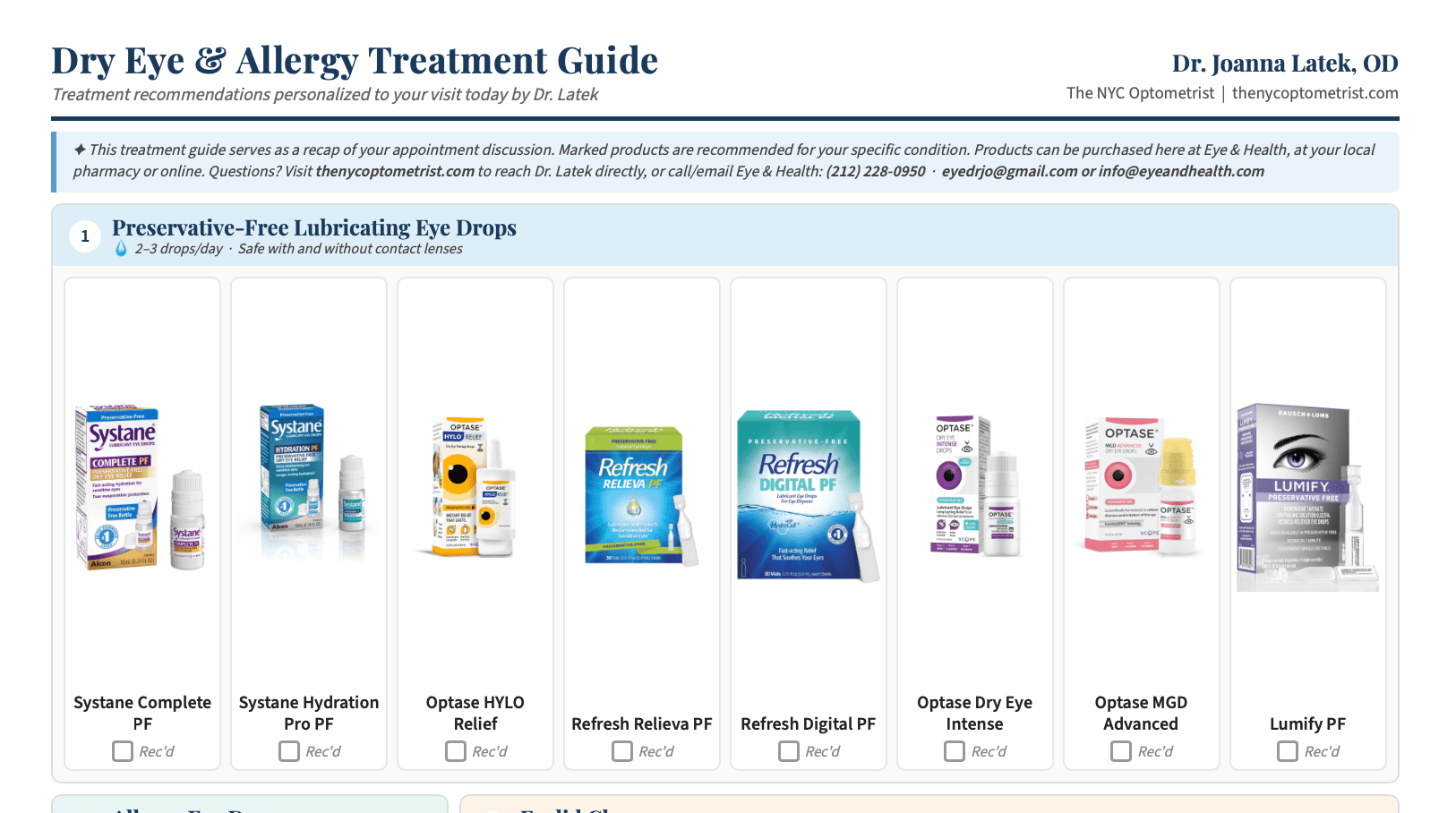
Dry Eye & Allergy Treatment Guide
Dry eye and eye allergies are conditions we discuss every single day in our office, and the right products make a real difference. This guide is your go-to reference for everything I recommend most, organized by category with links so you can find them easily at your pharmacy or online.
Cataract and Eye Surgery Co-Management: Your Optometrist's Role Before and After Surgery
When eye surgery is on the table, your optometrist handles the pre-op workup and post-op recovery while the surgeon operates. Here's what co-management actually looks like, and why most patients prefer it.
Thinking About LASIK? What a Laser Vision Consultation Tells You Before You Commit
A laser vision consultation in my chair isn't tied to a surgeon's schedule. It measures whether your corneas, prescription, and tear film actually make you a candidate, and which procedure, if any, fits your eyes.
Ortho-K: Wear Lenses at Night for Clear Vision All Day Without Glasses or Surgery
Orthokeratology uses rigid lenses worn overnight to gently reshape the cornea, giving you clear vision all day without glasses or contacts. No surgery, no daytime lenses. Here's how it works, who it fits, and what the first weeks feel like.
Prosthetic Contact Lenses: Restoring a Natural Look After Injury or Congenital Conditions
A prosthetic contact lens can rebuild the look of a natural eye after trauma, congenital iris defects, or scarring — and sometimes improve vision and light sensitivity at the same time. Here's what's involved.
NeuroLens for Migraines: When Eye Misalignment Is the Hidden Cause of Your Headaches
If you get regular headaches, brow-ache, or neck tension by mid-afternoon, especially on screen-heavy days, the trigger may be a tiny, subtle misalignment between your eyes. NeuroLens measures it and, for the right patient, corrects it. Here's how.
Living Well With Vision Loss: What a Low Vision Exam Can Do That Glasses Can't
A low vision exam isn't about prescribing stronger glasses. It's about helping you read the mail, recognize faces, and stay independent, even with vision loss that can't be fully corrected.
Colored Contacts That Won't Wreck Your Eyes: A Safe Approach to Cosmetic Lenses
Colored contacts are medical devices, not makeup. Here's what I tell patients who want to change their eye color for a wedding, a costume, or everyday life — without risking their vision.
Color Blindness Testing: What a Color Vision Exam Reveals (and What It Can't Fix)
Most 'color blind' people see color fine, they just confuse certain pairs. A color vision exam pinpoints exactly which cones are affected, why it almost never has a treatment, and where it still matters for licenses and careers.
Scleral Lenses for Keratoconus and Irregular Corneas: What a Specialty Lens Fitting Involves
If you've been told you can't wear contacts because of keratoconus, an irregular cornea, or prior eye surgery, you probably still can. Scleral and specialty lenses are designed for exactly those eyes. Here's what a specialty fitting involves.